Related: How to Foam Roll Your Quads Without Bruising Yourself
If you have ever bought posture and recovery gear at 11 p.m. because your upper back was screaming, you already know how this goes. The box arrives, you use it twice, and it lives behind the couch until you move apartments. I have been a physical therapist for twelve years, and half of that was spent in a clinic treating backs that "just hurt" and legs that "won't loosen up." The gear is rarely the problem. The match between the gear and the body part is the problem.
So I sort tools by what they are designed to do, not by how aggressive they look on the product page. The four items below cover the jobs I see most often in people who sit for a living: a ribcage that will not extend, a posture that collapses by 2 p.m., a pelvis that slides forward in a chair, and large muscle groups that need steady pressure. Each one is a tool with a specific job. None of them is a cure, and none of them works if you use it wrong.
One rule before we start. Two minutes per area, pressure that is uncomfortable but not painful. That is a protocol. If you are crying, you are not recovering, you are irritating tissue. Now the gear.
Best for a Stiff Ribcage and Mid-Back: Bodystance Backpod
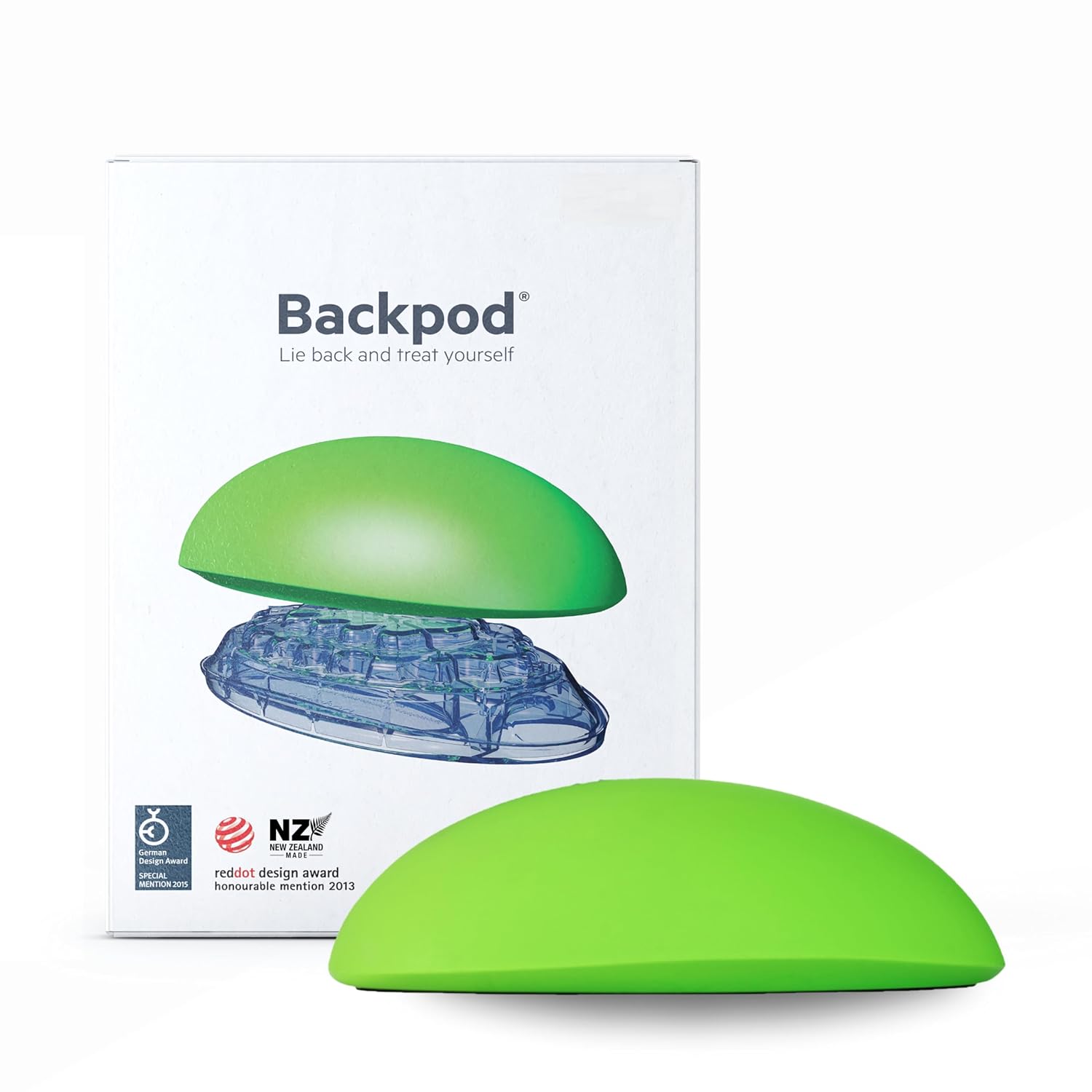
The Backpod is not a foam roller and it does not pretend to be. It is a rigid fulcrum shaped for the ribcage and the mid-back, which is the region where extension disappears first. Desk work, driving, and phone scrolling all pull the same way, and a cylinder roller cannot do much for a thoracic spine that has stiffened up, because you cannot get the roller to sit where the joint actually is.
What I like about it is that it forces patience. You lie back over it, you breathe, and gravity does the work. There is no way to rush it, which is exactly why I hand it to people who treat rolling like a race. It is the tool I reach for with a stiff upper back, and with rib pain that has already been cleared by a doctor. It is not for the low back, and it is not for the neck. Put it under your lumbar spine and you will regret it. That is not a design flaw, that is the design.
If you have costochondritis or Tietze syndrome, this is the one piece of gear on this list designed specifically with that in mind, and it is why it keeps showing up in my recommendations. Check current Amazon price and read the instructions properly before you use it.
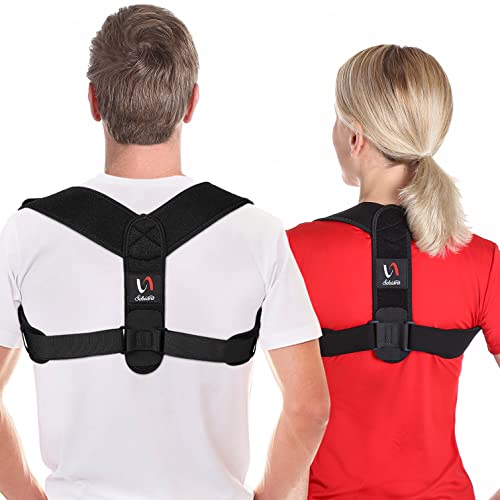
Best for Posture Cueing at a Desk: Schiara Posture Corrector
A brace is a cue, not a cure. I want to be blunt about that, because the marketing around posture correctors is optimistic at best. What the Schiara does well is remind you where your shoulders belong. When you have spent years rounding forward, "shoulders back" is not a feeling you can find on your own. The brace gives you the reference point.
The way to use it is short and deliberate. Twenty to thirty minutes at a time, during the hours you slump worst, usually mid-afternoon. Snug enough that you notice it, never tight enough to change how you breathe. Not for sleeping. Not for the gym. And not all day, because a brace that does the work for you will let your own muscles get lazy about doing it.
The fit is adjustable, which matters, because a brace that rides up or digs into the armpit gets abandoned inside a week. Wear it while you do the boring posture work, the rows, the band pull-aparts, the wall slides, and then take it off. Check current Amazon price if you want a training wheel for your upper back.
Best for Seated Pelvic Support: BackJoy Posture Seat
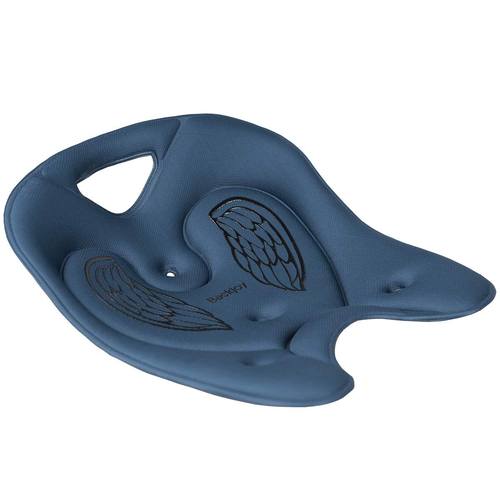
Sitting is not evil, but sitting the same way for six hours is. The BackJoy is a seat that tilts the pelvis forward and takes pressure off the tailbone, which changes where your weight lands. For anyone who drives a lot or spends the day in an office chair, that small change is often the difference between a low back that aches at 4 p.m. and one that does not.
The important part is the fit. This listing is the Petite XS in blue, and petite sizing is not a marketing label, it is a real difference in where the seat contacts your sit bones. Measure, or at least know your body, before you order. The other thing to know is that a seat like this cannot fix a chair that is the wrong height or a desk that is the wrong depth. It is a wedge of support, not a new office.
It is also the easiest item here to keep using, because it lives in the chair you already sit in. The best recovery tool is the one you do not have to remember. Check current Amazon price.
Best for Large Muscle Groups: Therabody WaveRoller
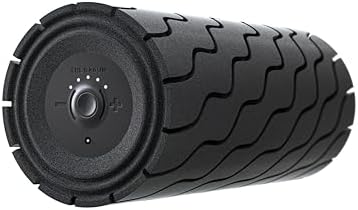
This is the luxury item on the list, and I will tell you exactly what the money buys. The WaveRoller is a high density roller with vibration, five customizable frequencies through the Therabody app, and Bluetooth. The vibration does help, particularly on quads, hamstrings, and glutes that have gone stubborn. But a good firm roller gets you about 80 percent of the way there, so buy this for convenience and consistency, not because vibration is magic.
Density is the real story. This roller is firm, and firm has a job: large muscle groups with a lot of tissue over them. Quads, hamstrings, glutes, lats. It does not belong on your ribcage, your neck, or directly on your lumbar spine. If you are new to rolling, this is not your first roller. If you have been rolling for a year and your quads laugh at a soft cylinder, this is the upgrade that makes sense.
The Bluetooth and app control are genuinely useful, because you can change the frequency without getting off the floor, which sounds like a small thing until you are mid-hamstring and comfortable. Check current Amazon price.
The posture and recovery gear reference table
This is how I sort these four when someone asks me in the clinic. Match the tool to the target, not the other way around.
| Product | What it is | Target area | Best for | Where to get it |
|---|---|---|---|---|
| <img src="/images/products/B01LYNZBV3.jpg" alt="Bodystance Backpod - Premium Device for Costochondritis & Tietze Syndrome | Physio Designed | NZ Made | Posture Corrector & Back Pain Relief" width="340" style="border-radius:8px;max-width:340px;width:340px;height:auto;max-height:420px;object-fit:contain"> Bodystance Backpod |
Rigid fulcrum device |
 Visit on Amazon → Visit on Amazon →Schiara Posture Corrector |
Adjustable soft brace | Shoulders, upper back, neck posture | Posture cueing for a few hours a day | Visit on Amazon → |
| <img src="/images/products/B08BVVDSBW.jpg" alt="BackJoy Posture Seat - Ergonomic Pressure Relief | Hip & Pelvic Support to Improve Posture at Home, Office Chair, Car Seat | SitSmart Angel Traction | Petite XS | Blue" width="340" style="border-radius:8px;max-width:340px;width:340px;height:auto;max-height:420px;object-fit:contain"> BackJoy Posture Seat |
 Visit on Amazon → Visit on Amazon →Therabody WaveRoller |
High density vibrating roller | Quads, hamstrings, glutes, lats | Experienced rollers, large muscle groups | Visit on Amazon → |
How I evaluate this gear
Four questions, every time. Does the density or the design match a real clinical need? Can a normal person use it without hurting themselves? Will it survive six months of real use, or will it flatten, pop, or lose its shape? And would I actually hand it to a patient?
That last question eliminates most of what is sold as recovery gear. A roller that flattens after three months fails question three no matter how good it felt in week one. An inflatable roller that pops mid-session fails question two. Anything "infused" or "textured like a massage" from a brand that also sells pool floats fails question one.
What the reference table tells you
Read it as a set of jobs, not a ranking. The Backpod handles the ribcage and mid-back, where a roller cannot reach. The posture corrector handles the cue, which is a nervous system job, not a tissue job. The BackJoy handles the pelvis in a chair, which is where most desk pain starts. The WaveRoller handles the big muscles you can actually roll.
Two of these are active tools: you use them, then you put them away. Two are passive: the brace and the seat do their work while you sit. Most people need one from each column. If your upper back is stiff and you sit all day, the Backpod and the seat are the combination I see work most often.
Should you buy the Bodystance Backpod?
Yes, if your problem is the upper back or the ribcage, and if you are willing to lie still and breathe for a few minutes. It is the one tool here that does a job a foam roller simply cannot do. Skip it if your pain is in the low back or the neck, because it is not built for either.
Should you buy the Therabody WaveRoller?
Yes, if you already roll consistently and you want to make that habit easier. The vibration helps, the app control is convenient, and the density is honest. No, if you are new to rolling, because a firm vibrating roller in the wrong hands is just an expensive way to bruise your IT band. Start with a basic firm roller, build the habit, then upgrade.
The pattern in all of this is the same one I repeat to patients every week. Pick the tool for the body part, use it for a dose you can repeat tomorrow, and keep it somewhere you will actually see it. A roller in the closet is a paperweight. A roller next to the couch is a habit.