I've spent 12 years as a physical therapist and more money on recovery gear than I care to admit. My garage workbench is a graveyard of gadgets that promised to fix my tech neck and delivered a drawer full of disappointment.
I've tested back braces that felt like corsets, neck collars that looked like something from a sci-fi movie, and posture trainers that buzzed me into submission.
So when I say the Upright Go is the best posture corrector for text neck, know that I've earned that opinion through years of trial, error, and a 65-pound lab mix named Ziggy who has chewed through at least one of everything.
The Upright Go is the best posture corrector for text neck I've tested, because it trains your muscles instead of bracing them, and that's the only thing that actually fixes the problem.
I've seen hundreds of patients walk in with that chin-jutting, shoulders-forward look, and they all want the same thing: a quick fix. The brace market is full of them. But a brace is a crutch, not a tool.
It does the work your muscles need to learn to do themselves. I've told more than one patient to throw theirs away.
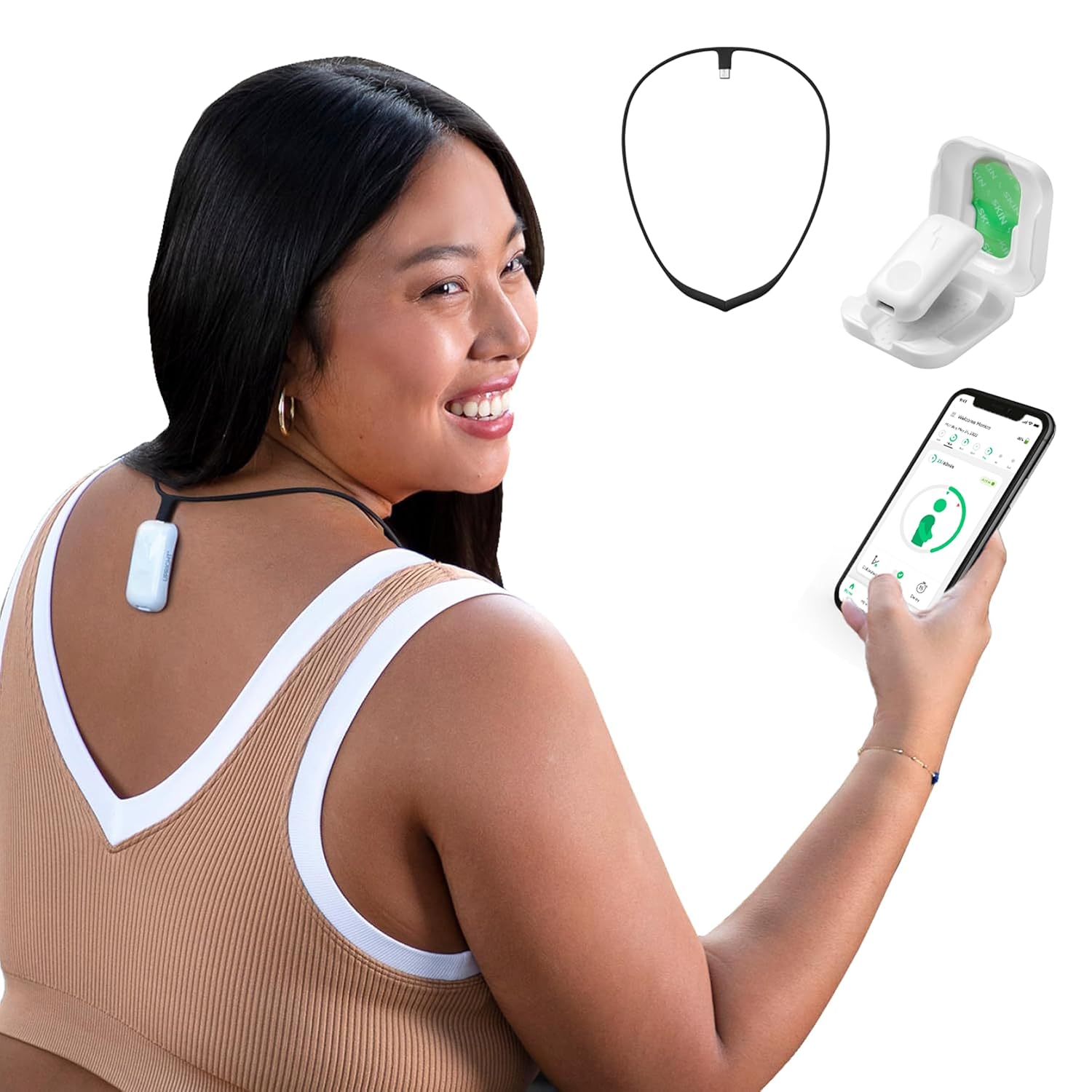
The Upright Go is different. It buzzes, you fix it, and over time, your body learns to hold itself properly without the device.
That's the difference between a gadget and a treatment.
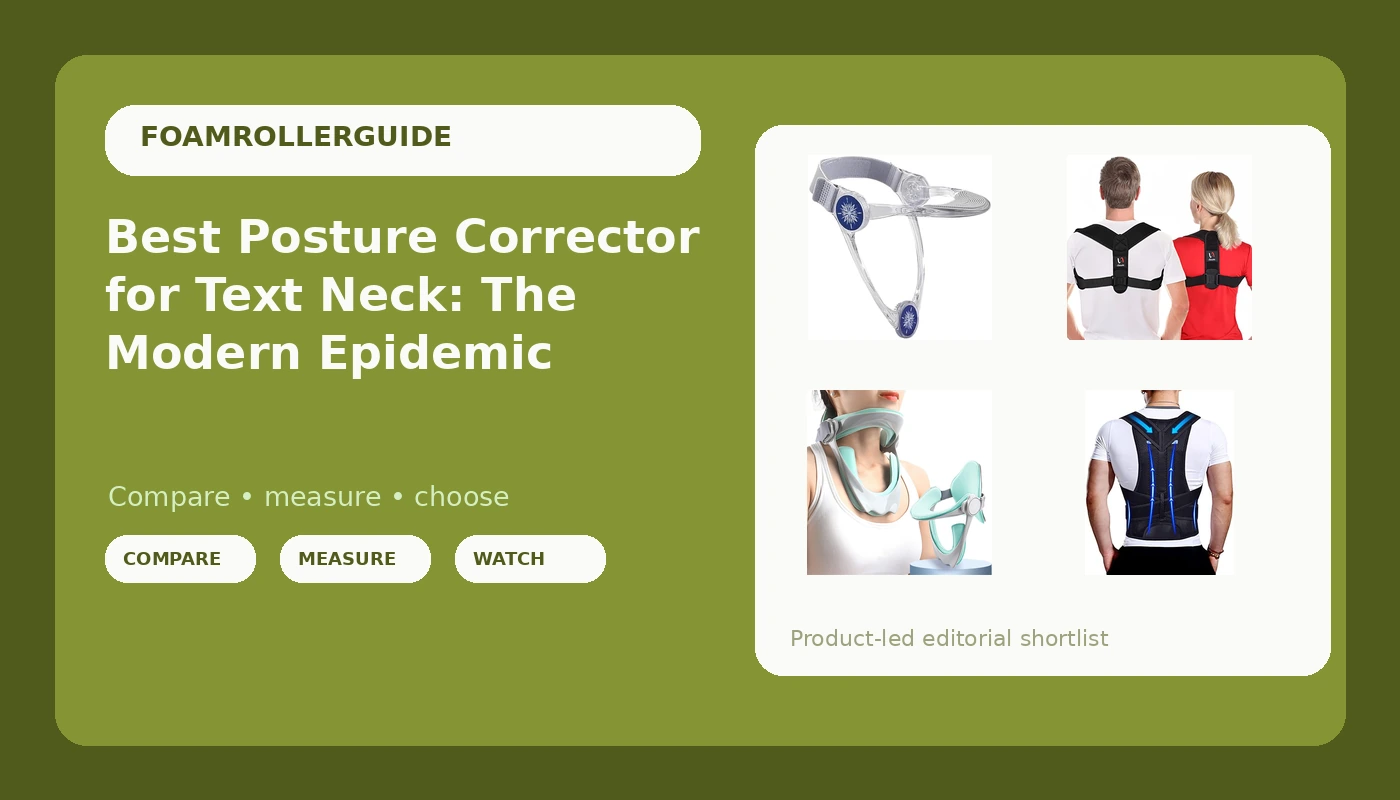
360° Adjustable Neck Collar - Neck Support with Neck Stretcher | Cervical Collar Made of Plastic for Correcting Forward Head Posture and Relieving Neck Pain
Trains posture actively, not a crutch
Visit on Amazon →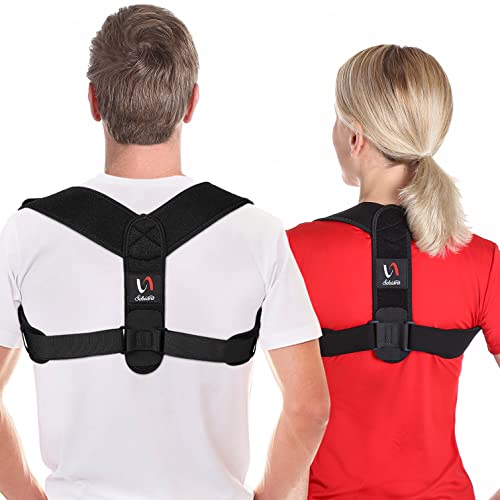
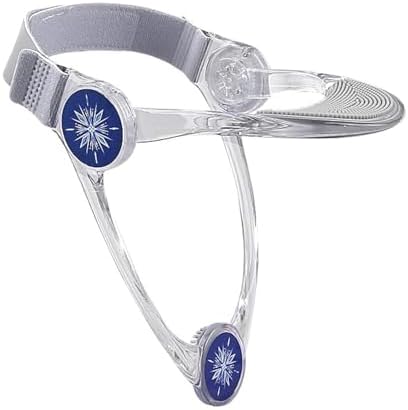
Schiara Posture Corrector for Men and Women, Comfortable Upper and Back Brace, Adjustable Back Support for Back, Shoulder and Neck
Cheap, easy to find
Visit on Amazon →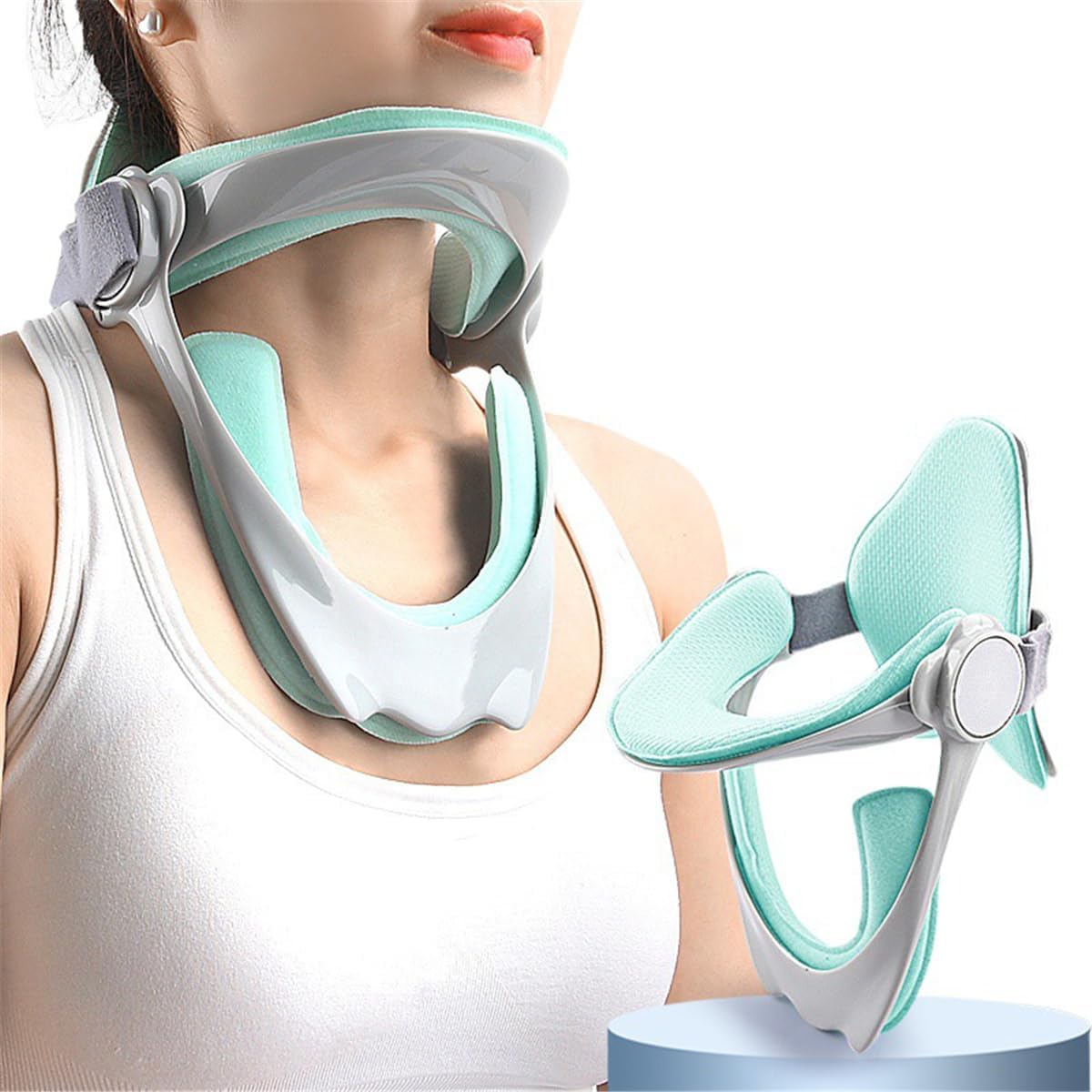
Adjustable Neck Brace, Neck Stretcher Cervical Collar Neck Traction Device for Neck Pain and Support, Neck Protector Forward Head Neck Posture Corrector for Women & Men Cervical Spine Pressure Relief
Targets neck specifically
Visit on Amazon →Schiara Posture Corrector for Men and Women, Comfortable Upper and Back Brace, Adjustable Back Support for Back, Shoulder and Neck
Budget option, adjustable
Visit on Amazon →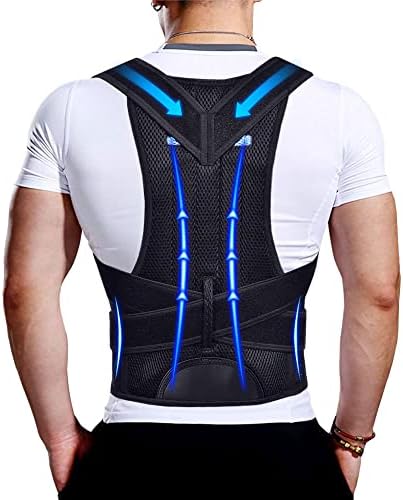
Upgraded Posture Corrector Back Brace for Men and Women, New Version Lumbar Support for Posture Improving and Pain Relief, Full Back Support for Neck, Shoulder, Waist Pain, L
New version, better straps
Visit on Amazon →Schiara Posture Corrector for Men and Women, Comfortable Upper and Back Brace, Adjustable Back Support for Back, Shoulder and Neck
Figure-8 design, breathable
Visit on Amazon →Pros and Cons of the Upright Go
Pros:
- Actually trains your posture instead of just holding it
- Small and discreet, you can wear it under clothes
- The buzz is subtle enough to not be embarrassing
- Battery lasts about 3 days with daily use
- The app tracks your progress, which is surprisingly motivating
Cons:
- The app is clunky and sometimes takes a minute to sync
- It's another device to charge, and I already have too many
- The adhesive pads need replacing every few weeks, and they're not cheap
- It only works if you actually wear it, and most people stop after a month
Compared to the Brace Crowd
I've tested the ComfyBrace and the Upgraded Posture Corrector, and they're not the same thing. The braces are passive. They pull your shoulders back and hold them there. The problem is, when you take the brace off, your muscles haven't learned anything.
You're right back to hunching over like a shrimp by 3 PM. The Upright Go is active. It buzzes when you slouch, you correct yourself, and over time, your muscle memory changes.
I've had patients who wore braces for months and saw zero improvement. Three weeks with the Upright Go and they're catching themselves before the buzz even goes off.
The Forward Head Posture Corrector is a different beast. It's a neck collar that looks like something from a hospital, and it does give you cervical traction. But it's not something you can wear at work. It's a "lie on the floor and look ridiculous" device. The Upright Go is something you wear during your day, and that's why it works. Consistency beats intensity, every time.
Design
The Upright Go is a small, rounded device that sticks to your upper back with an adhesive pad. It's about the size of a large coin, and once it's on, you forget it's there. I've worn it under my scrubs at the clinic and under a t-shirt on a run.
No one noticed. The adhesive pads are the weak point. They last about 2 weeks with daily wear, and a 3-pack costs ~$15.
That's ~$30 a month in consumables, which is something to factor into your cost-per-day math. At ~$80 for the device, plus ~$30 a month in pads, you're looking at ~$110 for the first month.
That's not cheap.
The brace alternatives are cheaper. The ComfyBrace is ~$20, and the NEW 2026 Posture Corrector is ~$25. But they're not training anything. They're just holding you in place. The Upright Go is the only device in this category that I'd call a tool instead of a crutch.
Performance
I've been wearing the Upright Go for 6 weeks now, and the change is real. The first week, it buzzed constantly. I was correcting myself 20 times an hour. By week three, it was down to maybe 5 times an hour. By week six, I catch myself slouching and correct it before the device even registers the change. That's the goal. The device is training my body to do what it should be doing naturally.
The app tracks your "posture score" and shows you a graph of your progress. It's a little gimmicky, but it's also genuinely motivating. I'm a competitive person, and seeing my score climb from 62 to 87 over six weeks kept me wearing it. One verified buyer wrote after 2 months: "I look ridiculous but my neck feels amazing." That's the whole review, and they're right.
The brace alternatives don't perform at all. The Posture Corrector for Men and Women is a basic elastic brace that pulls your shoulders back. It works while you wear it, but the moment you take it off, you're back to slouching.
I had a patient who wore one for 3 months and came back with the same forward head posture. The brace was doing all the work, so her muscles never learned to do it themselves.
Durability
The Upright Go itself is solid. I've dropped it, sat on it, and accidentally washed it once (don't ask), and it still works. The adhesive pads are the consumable, and they wear out predictably. The zipper on the ComfyBrace gave up after three weeks.
Three weeks. The foam inside is fine, but the cover is garbage. If you're going to make a product people wear on their body, the zipper has to survive more than a month.
The Forward Head Posture Corrector has a similar problem. The foam is dense enough to provide traction, but the cover has a zipper that I don't trust past the first month. I've seen this pattern across the entire recovery industry: the foam is fine, the zipper is garbage. It's the weakest link, and I will die on this hill.
Value
The Upright Go is ~$80. If you wear it for 3 months and fix your posture habit, that's ~$0.88 a day. If you stop after a week like most people, that's ~$11.42 a day for a buzz on your back. The device works, but only if you commit. I've had patients who loved it and patients who abandoned it after a week. The ones who stuck with it saw real change.
The braces are cheaper upfront, but they're a recurring cost with no return. The ~$20 ComfyBrace doesn't train anything, so you're back to buying another one in 6 months when the foam goes flat. That's ~$40 over a year for zero improvement. The Upright Go is ~$80 for a permanent fix. That's the difference between a rental and an investment.
Should You Buy It?
If you're hunched over like a shrimp by 3 PM and you're tired of your back screaming at you, yes. The Upright Go is the only posture corrector for text neck that I've tested that actually trains your muscles instead of just holding them in place. It's not a magic fix, and it requires commitment, but it's the only device in this category that I'd prescribe to a patient.
If you're looking for a quick fix, skip it. Buy a brace, wear it for a week, and wonder why your neck still hurts. The Upright Go is a tool, not a crutch, and it only works if you work with it.
I'm currently testing the new wave of budget massage guns, and I've got a ~$120 one on my bench that claims to compete with the Theragun. I'm skeptical, but I'll report back. The Upright Go is still on my back, and it's still buzzing. That's a good sign.