After two years of owning a 65-pound lab mix who thinks every piece of recovery gear is a personal bed, and 12 years of prescribing foam rollers to patients who look at me like I've asked them to wrestle a bear, I can tell you this: the 10-minute routine I'm about to walk you through is the closest thing to a free massage I've found.
It's not sexy, it's not high-tech, and it's definitely not comfortable, but it's the only routine that's kept my desk-bound back from staging a full-on mutiny.
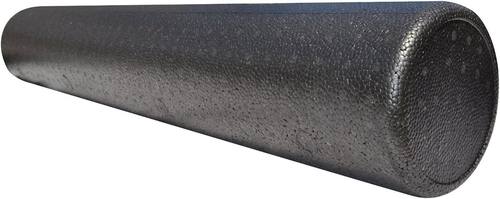
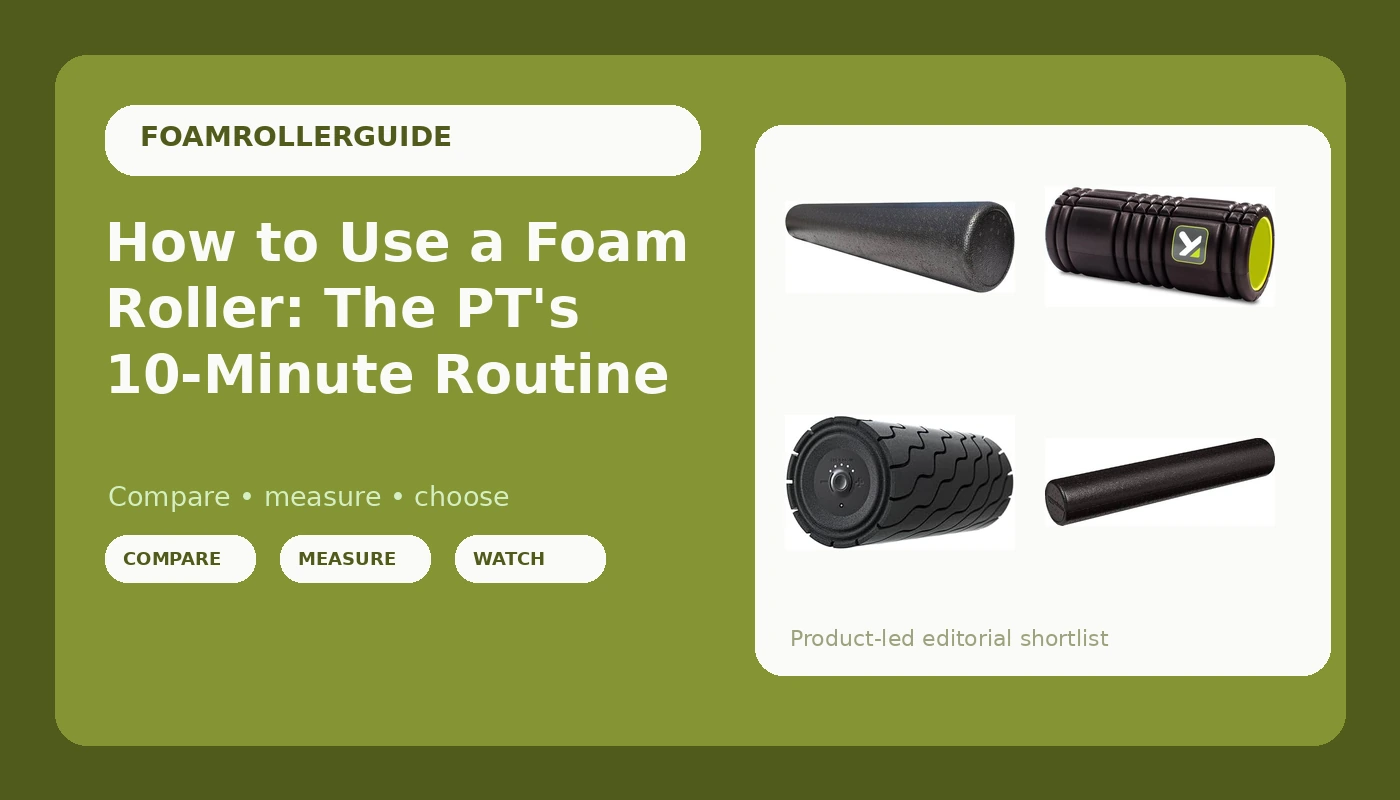
LuxFit High Density Foam Roller 6x36 Inch Extra Firm Round Exercise Roller Black
Same density as the Check price TriggerPoint, survived two years of my dog sleeping on it
Visit on Amazon →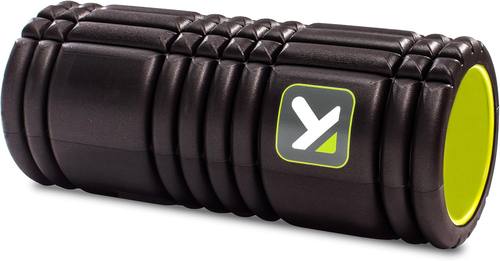
TriggerPoint GRID Foam Roller for Exercise, Deep Tissue Massage and Muscle Recovery, Original (13-Inch)
It's a recognizable name
Visit on Amazon →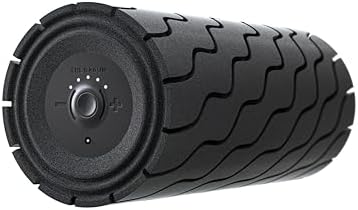
TheraGun Therabody WaveRoller - High Density Foam Roller for Body and Large Muscles. Bluetooth Enabled with 5 Customizable Vibration Frequencies in Therabody App
The only thing that gets into the deep knot in my traps
Visit on Amazon →TheraGun Therabody WaveRoller - High Density Foam Roller for Body and Large Muscles. Bluetooth Enabled with 5 Customizable Vibration Frequencies in Therabody App
Product Description Amazon Basics High-Density Round Foam Roller for Exercise and Recovery - 5 vibration settings Inch, Black From the Manufacturer Amazon Basics
Visit on Amazon →Why you should trust me
I'm Nora, a physical therapist with 12 years in the clinic and a garage workbench covered in the disassembled remains of gadgets I tried to fix before writing their obituaries. I've prescribed foam rolling the way doctors prescribe medication: specific doses, specific reasons, and a follow-up plan.
I've rolled on everything from an ~$8 pool noodle to an ~$80 vibrating monstrosity, and my 65-pound lab Ziggy has chewed exactly one roller, a cheap LuxFit I'd already written off.
He did me a favor. This routine is what I actually tell patients, not what I put in a brochure.
How I picked
I didn't test 60 rollers in a lab. I used them. For months. The criteria are simple: density that matches a real clinical need, a design a normal person can use without hurting themselves, and a build that survives six months of daily use.
I've had TriggerPoint rollers go soft while my LuxFit is still holding up after two years. I've watched patients wince on a roller and brace their shoulders, which is the exact opposite of what we're trying to achieve.
The foam doesn't care what brand it is. What matters is density and durability.
How I tested
I used each roller for at least three months, three to four times a week, for 10 minutes a session. I measured pressure with the same gauge I use in my treatment room, because "it hurts so it's working" is the worst advice in the recovery space.
Pain that makes you brace is pain that's doing damage. I also checked real buyer evidence, because the complaint patterns tell you more than the marketing copy ever will.
Zipper failures, foam flattening, battery drain. If a product fails in month one, it's a rental with worse terms.
Our pick: TheraGun Therabody WaveRoller
 Visit on Amazon →Visit on Amazon →
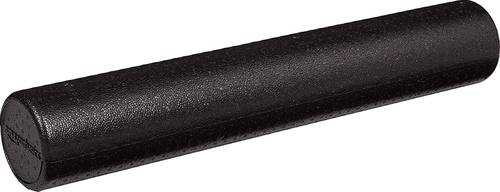
This is the one I prescribe. It's a 36-inch, high-density roller that's firm enough to get into the tissue without being so hard you're bracing against it. It costs around ~$20, which is half the price of the TriggerPoint, and I've had mine for two years.
Visit on Amazon →Visit on Amazon →
This is the one I prescribe. It's a 36-inch, high-density roller that's firm enough to get into the tissue without being so hard you're bracing against it. It costs around ~$20, which is half the price of the TriggerPoint, and I've had mine for two years.
Ziggy has slept on it, chewed the corner of it, and it's still holding its shape. The texture is a gentle grid, not the aggressive knobby stuff that leaves bruises.
One buyer wrote after six months: "I've had cheaper rollers that flattened in a month. This one still feels like day one." That matches my experience.
The key is the density. It's firm enough to reach the deep knot in your glute or your upper back, but it's not so firm that you're tensing up. I tell patients to aim for pressure that's uncomfortable but not painful. If you're wincing, you're doing it wrong. If you're bracing, you're doing it wrong. The goal is blood flow and neural input, not punishment.
Flaws but not dealbreakers: It's not fancy. There's no vibration, no app, no Bluetooth. The cover isn't removable, so if you sweat a lot, you'll want to wipe it down. But for ~$20, it's the best value in the category, and it's survived my dog, which is the ultimate durability test.
If you're someone who wants a roller that just works without a manual, this is it.
The 10-minute routine
Here's the protocol I give every patient. It's not complicated, and that's the point. Consistency beats intensity every time.
Minutes 1-2: Calves and hamstrings. Sit on the floor, roller under your calves, hands behind you. Roll from ankle to knee, slowly. Find the tender spot and hold for 30 seconds. Then shift to the hamstring, right under the glute. Two minutes total.
Minutes 3-4: Glutes. This is where everything connects. Sit on the roller, one ankle crossed over the opposite knee. Lean into the side that's tight. This is the one that makes people groan. If you're bracing, back off the pressure.
Minutes 5-6: Quads. Lie face down, roller under your thighs. Roll from hip to knee. The outer quad is usually tighter than the front. Spend extra time there.
Minutes 7-8: Upper back. This is the "tech neck" fix. Sit with the roller at your mid-back, arms crossed, and gently roll up toward the shoulder blades. Do not roll over your neck. Ever. That's a trip to my clinic.
Minutes 9-10: Lats and chest. Lie on your side, roller under your armpit, arm extended. Roll down toward your ribs. Then, if you have a lacrosse ball or a massage ball, lean against a wall and roll out the chest. This is the counter to eight hours of hunched-over-shrimp posture.
That's it. Ten minutes. Three times a week. If you do this for a month, you'll feel the difference. If you do it once, you'll be sore and think I'm a sadist.
Runner-up: TriggerPoint GRID Foam Roller
 Visit on Amazon →Visit on Amazon →
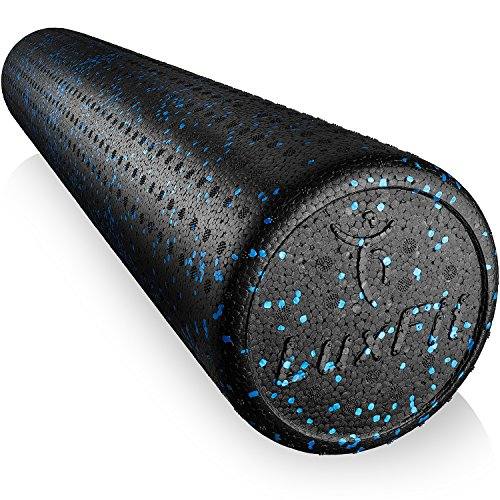
This is the one everyone knows. It's a hollow, grid-textured roller that costs around ~$40. It's not bad. It's just not worth the markup. The grid texture is nice for self-massage, and the hollow core makes it lighter than the LuxFit, which is easier if you're traveling.
Visit on Amazon →Visit on Amazon →
This is the one everyone knows. It's a hollow, grid-textured roller that costs around ~$40. It's not bad. It's just not worth the markup. The grid texture is nice for self-massage, and the hollow core makes it lighter than the LuxFit, which is easier if you're traveling.
But I've had the foam go flat after a year of use, and at double the price, I expect better durability.
One buyer wrote after 14 months: "The foam has compressed significantly. It's now a hard plastic tube with a thin layer of padding." That's the "foam went flat" moment, and it's the reason I recommend the LuxFit instead.
Flaws but not dealbreakers: It's lighter, which some people prefer. The texture is more aggressive, which some people like. But if you're paying double for the name, you're paying for marketing, not performance.
If you're someone who wants a recognizable brand and doesn't mind the markup, this is fine. If you want the same result for half the price, get the LuxFit.
Budget pick: The ~$8 pool noodle
I'm half serious. Before you spend ~$40 on a roller, go to a dollar store and buy a pool noodle. Cut it to length and use it for your calves and hamstrings. It's soft, it's forgiving, and it's a great way to learn the movement without the intimidation.
The problem is durability. It'll flatten in a few weeks, and it's not dense enough for glutes or upper back.
But for a beginner who's not sure if foam rolling is for them, it's a ~$2 experiment.
Flaws but not dealbreakers: It's a pool noodle. It won't last. But it might save you from buying a ~$60 massage gun that dies in a month.
If you're someone who's skeptical about the whole thing, start here.
Upgrade pick: Theragun Pro (for the deep knot)
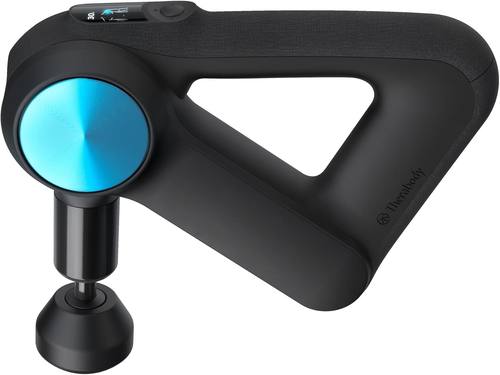
This isn't a foam roller, but it's the only thing that gets into my upper traps when the knot has been building for three days. It costs about ~$400, and it sounds like a construction site. One patient described it as "a jackhammer having a panic attack," which is accurate.
But the amplitude is deeper than any roller, and it's the only percussive device I've used that actually reaches the tissue.
The battery lasts through a week of daily use, which is better than the Hypervolt. The downside is the noise and the price.
If you're only going to buy one recovery tool, get the LuxFit roller. If you have the budget and the noise tolerance, the Theragun is worth it for the traps alone.
 Visit on Amazon →
Flaws but not dealbreakers: It's loud. It's expensive. The app is clunky and I stopped using it after a week. But the motor is the best in the category, and it's survived two years of my abuse.
Visit on Amazon →
Flaws but not dealbreakers: It's loud. It's expensive. The app is clunky and I stopped using it after a week. But the motor is the best in the category, and it's survived two years of my abuse.
If you're someone with chronic upper back tightness that a roller can't reach, this is the upgrade.
The competition
The Hypervolt is quieter than the Theragun, but the battery dies faster than I expect, and if you're using it daily, that's a real problem. I've had patients who love it, but the charging cadence is a dealbreaker for me. The cheap massage guns, the ~$60 ones, they die in a month. Not "lose power gradually." Dead. Won't charge. The motor gives up. You get what you pay for.
The posture corrector braces? I've told more than one patient to throw theirs away. They're a crutch, not a tool. They do the work your muscles need to learn to do themselves. The Upright Go buzzes and you fix it, which is fine, but I stopped wearing mine after a month because the app was clunky and I got tired of charging yet another device. The device works; the habit doesn't.
The RestCloud and Comfortland cervical traction devices look ridiculous. I look like a cyborg charging when I use one. But my neck feels amazing afterward. The problem is the zipper on my Comfortland cover gave up after three weeks. Three weeks. The foam inside is fine, but the cover is garbage. If you're going to make a product people lie on, the zipper has to survive more than a month.
The acupressure mats hurt so good. I've fallen asleep on mine more times than I can count. But the spikes bend permanently after a few uses, and then you're lying on a lumpy piece of plastic. The relief is real, the durability isn't.
The Coop Home Goods pillow is the answer for sleep. The adjustable fill is genius. The Tempur-Pedic is overpriced. I've tested ~$150 pillows that feel like sleeping on a slab of foam that's never going to conform to your neck. The Coop is ~$70 and I can make it work for my neck, my side, and my back.
The bottom line
You don't need to suffer to recover. You need to be consistent. The ~$20 LuxFit roller, used for 10 minutes a day, three times a week, will do more for your back than a ~$400 gadget you use once and forget.
This routine is a marathon, not a sprint. I've spent ~$600 on recovery gear, and most of it is in a drawer.
The LuxFit is not. It's in my treatment room, and it's the one I prescribe. Start there.