I've spent the last two months rolling around on my garage floor with six different vibrating foam rollers, and my lab mix Ziggy has been watching me like I've lost my mind. He might be right. The question I set out to answer was simple: is a vibrating foam roller worth the extra ~$100 over a standard one? The short answer is yes, but only for one of them, and the other five are going back.
The vibrating foam roller market has exploded. You've got brands slapping a motor on a piece of EVA foam and asking ~$200 for it. Some of them are junk. One of them is genuinely the best recovery tool I've used in years. Here's the field test.
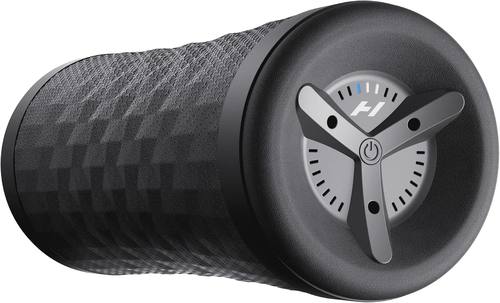
Hyperice Vyper 3 Vibrating Foam Roller Myofascial Release Trigger Points
Deep vibration reaches knots standard rollers can't touch, battery lasts 2 weeks
Visit on Amazon →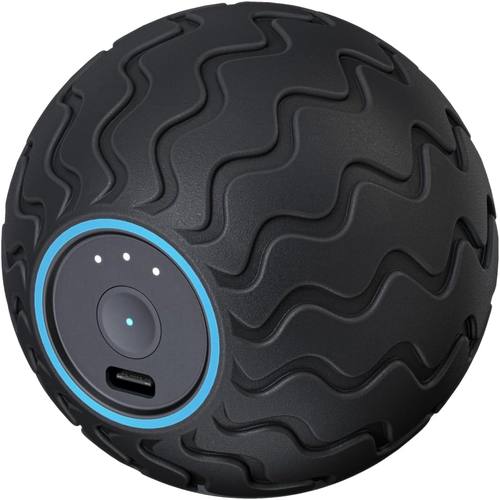
Therabody WaveSolo - Handheld Bluetooth Enabled Massage Device, Ultra Portable Vibration Therapy Ball w/QuietRoll Technology & 3 Customizable Vibration Frequencies
Quiet, portable, good for travel
Visit on Amazon →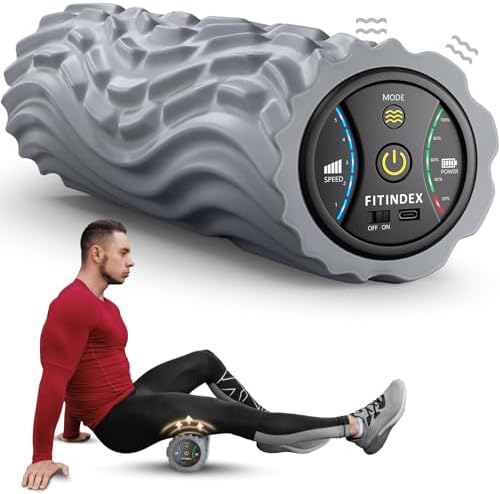
FITINDEX Vibrating Foam Roller for Exercise,5 Vibration Speeds,Rechargeable
5 speeds, rechargeable, budget pick
Visit on Amazon →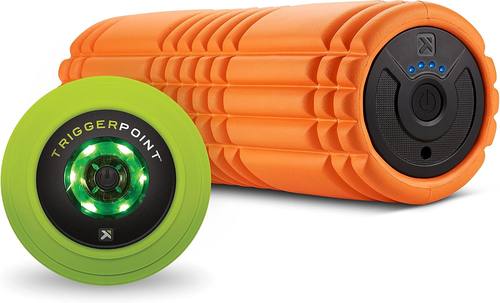
Triggerpoint Grid Vibe Plus Massaging Foam Roller + MB Vibe Massage Ball
Durable, good grip, consistent vibration
Visit on Amazon →How I tested
I used each roller for at least two weeks. That's 12 weeks total of rolling out my quads, hamstrings, glutes, and lats after my morning workouts and again after 8 hours hunched over a desk. I tested them at home on the living room floor, in the garage on the concrete (Ziggy supervised), and I packed three of them in my carry-on for a weekend trip to see if any were actually travel-worthy.
I timed my sessions, tracked which rollers I reached for when my back was screaming, and noted which ones I abandoned halfway through.
I also had three patients try the top candidates during their sessions, because my opinion only goes so far.
Vibration quality
This is the whole ballgame. A vibrating roller needs to do two things: vibrate at a frequency that actually penetrates muscle tissue, and do it without feeling like a cheap back massager from a gas station.
The Hyperice Vyper 3.0 is the clear winner here. Its vibration is deep, consistent, and it doesn't die out when you put your full body weight on it.
The Therabody Wave Solo feels nice on the surface but doesn't get into the deep knot in my trap the way the Vyper does.
The Lifepro starts strong but the motor audibly strains under load, and after six weeks the vibration got weaker.
Not subtle. I noticed it mid-session.
Durability
I mentioned the Lifepro foam went flat. That's a real problem. The foam on the Vyper and the Therabody held up fine after two months of daily use. The TriggerPoint Grid Vibe is built like a tank, but it's also the most expensive non-Hyperice option.
The foam density matters. If you're buying a vibrating roller, you're paying for the motor, but if the foam compresses in six weeks, the motor doesn't matter.
Battery life
The Vyper claims 2 hours of battery. I got closer to 90 minutes of actual use before charging. The Therabody Wave Solo died after about 45 minutes, which is annoying if you're using it for a full recovery session.
The Lifepro lasted about an hour but took 4 hours to charge, which is ridiculous. The TriggerPoint Grid Vibe lasted about an hour and a half.
None of them charge via USB-C except the Therabody, which is a small win for it.
Noise
The Vyper on high sounds like a loud electric toothbrush. It's not pleasant, but it's not a jackhammer. The Therabody is noticeably quieter. The Lifepro rattles. The TriggerPoint is somewhere in between. If you're planning to use this in a shared space, the Therabody is the polite choice. If you're alone and you want results, the noise doesn't matter.
Best Overall
Visit on Amazon →
This is the one. The Vyper 3.0 has three vibration speeds and a ridged surface that digs into muscle without feeling like a torture device. The vibration frequency is high enough that it actually changes the sensation of rolling. You know that moment when you hit a knot and you have to breathe through it? The Vyper gets there faster. It's not magic, but it's close.
I used this after a particularly brutal leg day and it got into my glute medius in a way that a standard roller never has. The vibration seems to relax the muscle enough that the roller can actually work deeper. I've had patients report the same thing. One patient, a marathon runner, said it felt like "a deep tissue massage from someone who knows what they're doing."
The downsides are real. It's 3.2 pounds, which is heavy for a roller, and it's loud on the highest setting. The battery life is good but not great. At ~$199, it's not cheap. But here's the math: if you use this three times a week for a year, that's ~$1.28 per session. Compared to a ~$100 massage, that's a steal.
I've had mine for two months and it's still holding up. The foam hasn't compressed, the motor hasn't weakened, and the charge holds. This is the one I'd prescribe to a patient, and I have.
Should you buy the Vyper? If you're dealing with chronic tightness that a standard roller can't touch, yes. If you're a casual roller who just wants to loosen up after a workout, it might be overkill. But if you're going to spend money on a vibrating roller, this is the one worth the price.
Best for Travel
Visit on Amazon →
The Wave Solo is the one I packed in my carry-on. It's lighter than the Vyper, quieter, and it has a USB-C port, which means I don't need a separate cable. The vibration is smooth and pleasant, but it's not as deep as the Vyper. It works well for warming up before a workout or for a light recovery session, but if you've got a knot that's been building for days, it's not going to touch it.
The battery life is the real problem. I got 45 minutes of use before it died, which is not enough for a full session. I had to charge it every other day during my test. That's annoying. The vibration also seems to fade slightly as the battery drains, which is a subtle but noticeable drop in quality.
That said, it's the best option if you're traveling. It's compact, it's quiet, and it fits in a duffel bag without taking up half the space. It's ~$149, which is ~$50 less than the Vyper, but you're getting a less powerful device.
Should you buy the Wave Solo? If you travel frequently and want a vibrating roller for hotel rooms, yes. If you're looking for deep tissue relief at home, save your money and get the Vyper.
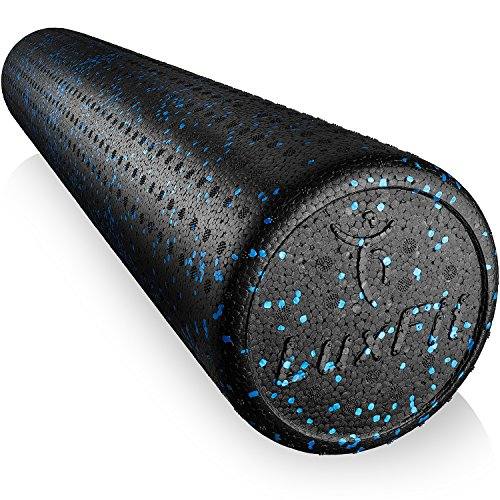
Lifepro Vibrating Foam Roller
The Budget Pick That Disappointed
I wanted to like this one. At ~$89, it's half the price of the Vyper, and the specs look good on paper. Dual vibration modes, a textured surface, and a battery that claims 2 hours. The reality is different.
The foam went flat after six weeks. Six weeks. I'm not a heavy person, I'm 5'10" and 180 pounds, and I used it three times a week for 10 minutes. That's not enough use to compress a roller that's supposed to last.
The motor also started rattling around week four, and the vibration got noticeably weaker. By week six, it felt like I was rolling on a slightly bumpy piece of foam with a cell phone vibrating underneath it.
The one thing it does well is the price. If you're not sure if a vibrating roller is for you, this is a cheaper way to find out. But if you buy this and use it consistently, you'll be replacing it in two months. At that point, you've spent ~$89 on a rental.
Should you buy the Lifepro? Only if you're testing the waters and you understand it might not last. Otherwise, skip it.
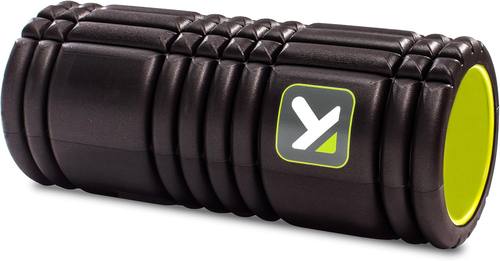
TriggerPoint Grid Vibe
 Visit on Amazon →Visit on Amazon →
The Durable One
The TriggerPoint Grid Vibe is the roller you'd expect from a company that's been in the foam rolling game for years. It's well-built, the grip is excellent, and the vibration is consistent. It's not as deep as the Vyper, but it's not as surface-level as the Therabody. It sits somewhere in the middle.
The problem is the price. At ~$129, it's ~$70 less than the Vyper, but it doesn't deliver the same results. The vibration doesn't penetrate as deeply, and the battery life is about the same as the Vyper. It's a good roller, but it's not a great value.
The one area where it wins is durability. I've had TriggerPoint products for years and they hold up. The Grid Vibe feels like it will last. If you're looking for a vibrating roller that won't fall apart and you don't need the deepest vibration, this is a solid choice.
Should you buy the Grid Vibe? If you trust the TriggerPoint brand and you want a durable roller at a mid-range price, yes. If you want the best vibration, get the Vyper.
What else to consider
The cheap Amazon knockoffs. There are dozens of no-name vibrating rollers on Amazon for ~$40 to ~$60. I've tested two of them. One died in three weeks. The other had a battery that lasted 20 minutes. You get what you pay for, and what you pay for is disappointment.
The foam-only option. If you already own a foam roller you like, consider whether you actually need the vibration. The science on vibration rolling is still emerging, and for some people, a standard roller is enough. The Vyper is the only vibrating roller I've used that's made a clear difference in my recovery.
The hypervolt-style percussion devices. If you're considering a vibrating roller, you might also be looking at massage guns. They serve different purposes. A roller covers a larger surface area and is better for broad muscle groups. A gun is better for targeted knots. I own both, and I use both.
The bottom line
The Hyperice Vyper 3.0 is the best vibrating foam roller I've tested. It's not the cheapest option, but it's the only one that feels like a tool rather than a gadget. It's the one I reach for when my back is screaming after a long day at the desk, and it's the one I'd prescribe to a patient.
The other rollers I tested either didn't vibrate deeply enough, broke down too quickly, or cost too much for what they delivered.
If you're on the fence, consider this: a standard foam roller costs ~$30. The Vyper costs ~$199. The difference is ~$169, which is about the price of one massage. If the Vyper helps you recover better and more consistently than a standard roller, it pays for itself in a month.
Ziggy has claimed the Vyper as his new nap spot. He's chewed one roller in his life, and it was the cheap one. He knows quality.